Documentary Investigation
Scandinavia’s Strangest Stories, With the Evidence Beside Them
Popular memory portrays the Viking Age and Nordic folklore through dramatic fiction. We place the verifiable archaeological record, medieval manuscripts, and contemporary records right beside the tall tales.
From the cryptic cryptographic cipher on the Rök runestone to the peat bogs of Jutland and the real reasons behind midwinter straw goats, discover what is grounded in dirt and parchment—and where the mystery honestly remains unsolved.
Start With a Strange Detail: introduction and topic routes
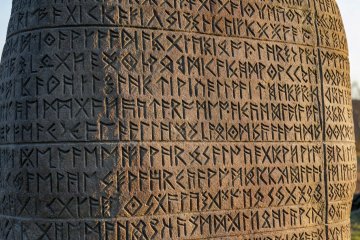
In 1872, near Lake Vättern in Östergötland, an early-ninth-century granite slab known as the Rök runestone was removed from a church wall. It holds roughly 760 runes, making it the longest known runic carving in the world. Instead of simply cataloguing livestock or family lines, its author, Varinn, mixed older futhark ciphers, references to military loss, and cosmic riddles about an emperor who ruled over the shores of the Reid Sea nine generations prior.
This is where our study begins. Scandinavia is dense with such moments: points where romantic folklore claims supernatural monsters, while the physical object points to climate catastrophe, political grief, or sophisticated medieval encryption. Navigate our four core investigations below:
Viking Mysteries: Reading the Remains
The Oseberg burial's peacocks and cannabis seeds, the Gotland picture stones, and weapon-bearing female burials like Bj 581.
Nordic Legends: Where Folklore Takes Root
Nøkken at the waterfall, church grims, hulder folklore, and how small forest communities rationalised unexplained loss.
Unusual Traditions: The Ritual and Its Reason
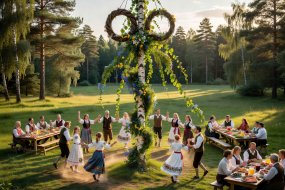
The Julbock straw goat of Gävle, Midsummer herring barrels, St. Lucia candle wreaths, and fastelavn birch twigs.
Distinctive Facts: Ordinary Life, Odd Details
Iceland’s named naming committee, Finnish wife carrying, the Svalbard seed vault protocol, and extreme subarctic everyday law.
What the Vikings Left Behind: archaeological mysteries
Much of what popular media repeats about Viking culture relies on Victorian translations of 13th-century Icelandic sagas written centuries after Christianisation. When we look at archaeological layers dating to between 793 and 1066 CE, the reality is far more intricate.
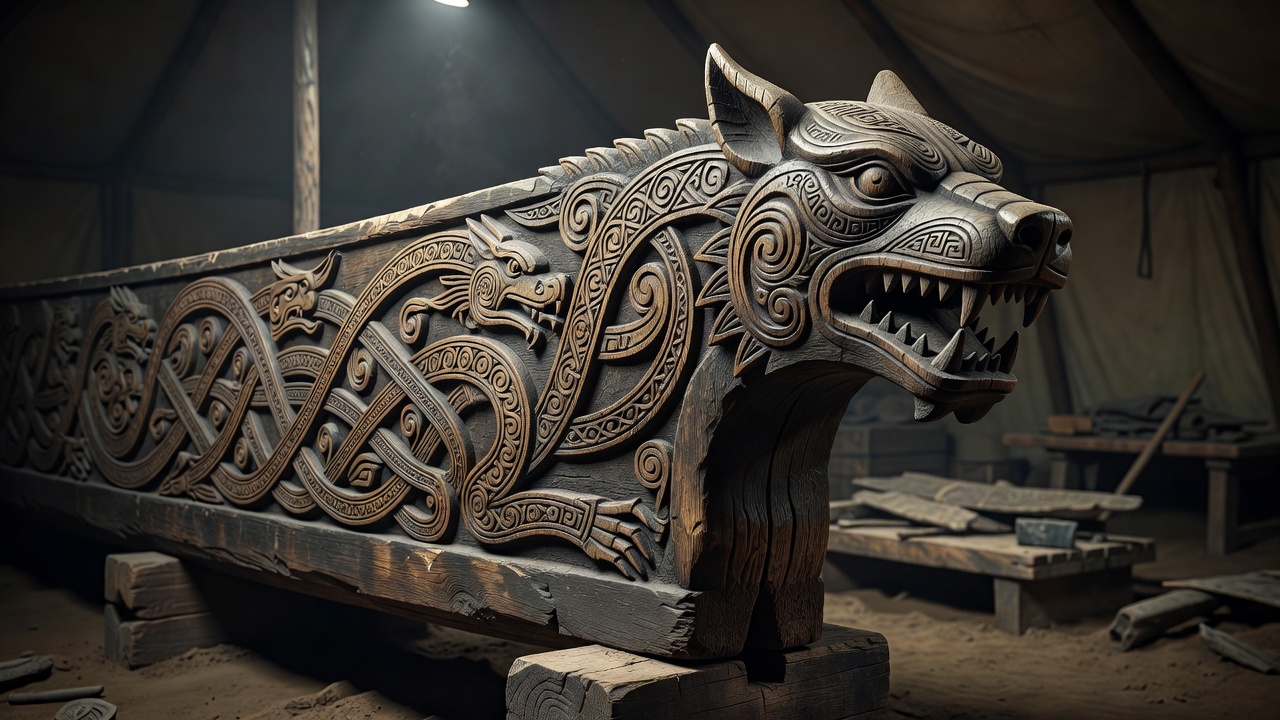
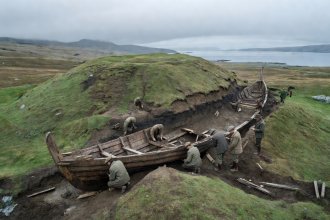
Consider the Oseberg excavation in Vestfold, Norway. Sealed under turf in 834 CE, the ship contained two high-status women, one aged around 70–80 and another around 50–55. With them lay tapestries depicting processions, sledges carved with gripping beasts, and exotic foreign goods: silk ribbons from Byzantium, foreign walnuts, and seeds of cannabis sativa. Scholars continue to debate whether one was a queen, a priestess (völva), or both, and whether the younger woman was sacrificed alongside the elder.
Similarly, the runic stones of Jelling in Jutland, Denmark, raised by King Harald Bluetooth around 965 CE, showcase a monument in transition: dual burial mounds framing a pre-Christian stone ship setting, crowned by a stone depicting Christ intertwined with Scandinavian beast interlacing.
Stories That Outlasted Their Tellers: Nordic legends
Scandinavian folklore did not vanish when Norse pagan temples fell. Instead, early folk beliefs were pushed into the deep spruce forests, marshes, and waterways, taking the shape of the Vættir (spirits of the land) and warning tales.
- Nøkken / Näcken
- Legend: A shape-shifting water spirit playing hypnotic violin tunes to lure children and travellers into dangerous currents.
- Practical Origin: A functional community warning system to keep unsupervised farm children away from turbulent spring runoff and millponds.
- Huldra / Skogsrå
- Legend: A seductive forest guardian appearing as a woman from the front, but with a hollow back resembling a decayed tree trunk and a cow’s tail.
- Practical Origin: An embodiment of the disorientation felt in dense boreal woodlands, explaining charcoal-burners losing track of time in isolated camps.
Customs That Still Surprise: unusual traditions
Modern Scandinavian societies routinely rank high on global indexes of secularism and digital public services, yet their calendar remains tightly tethered to seasonal agrarian customs that startle outside observers.
On Saint Lucia’s Day (December 13), preschool and school children across Sweden parade through dark corridors dressed in white gowns, led by a designated Lucia wearing a wreath of glowing candles upon her head, distributing saffron buns (lussekatter). The visual is striking, originating in a collision between the Sicilian martyr Lucia, the pre-Gregorian winter solstice calendar, and the fearsome folklore figure Lussi, an airborne nocturnal rider.
In Gävle, Sweden, the town builds a giant 13-metre-tall straw goat (Gävlebocken) every December in Slottstorget to honour the ancient Julbock tradition. Despite 24-hour security cameras, flame-retardant sprays, and police patrols, the goat has become internationally famous because locals and anonymous saboteurs have managed to burn it down or damage it in more than 35 of the past 58 years—a bizarre modern game of cat-and-mouse.
Everyday Life, Unexpected Turns: distinctive facts
Daily civic structures across Denmark, Norway, Sweden, Finland, and Iceland include odd quirks that reflect geographic isolation, historical pragmatism, and community consensus.
| Region | Notable Practice | Historical Rationale |
|---|---|---|
| Iceland | Mannanafnanefnd (Personal Names Committee) | Mandates that given names can take proper Icelandic grammatical case endings and do not cause future harassment. |
| Svalbard (Norway) | Requirement to carry rifle & prohibition on burial | Permafrost prevents organic decomposition, and polar bear encounters are a constant risk outside settlements. |
| Finland | Day of National Failure (Lokakuu 13) | An annual event dedicated to embracing mistakes, counterbalancing perfectionism and encouraging startup risk-taking. |
| Sweden | Allemansrätten (Right to Roam) | Centuries-old constitutional principle allowing non-destructive camping, foraging, and walking across private forest lands. |
Separate the Tale From the Trace: evidence guide
To avoid confusing 19th-century romantic nationalism with verified evidence, we recommend asking three baseline questions whenever encountering an extraordinary Scandinavian historical claim:
The Three Rules of Scandinavian Archaeology
- Is the primary source contemporary with the event? Sagas recorded in 1250 CE about events in 870 CE reflect 13th-century Christian aristocratic concerns more than pagan daily life.
- Does organic stratigraphy support the saga? Dendrochronology (tree-ring dating) and bone collagen carbon tests provide objective anchors that manuscripts often inflate.
- Was the artefact modified during Victorian museum curation? Horned helmets, for example, were added to stage productions of Wagner’s Der Ring des Nibelungen by costume designer Carl Emil Doepler in 1876; no Viking helmet has ever been excavated with cattle horns.
Your Next Question: FAQ preview and references
Curiosity does not stop at simple summaries. We maintain an in-depth reference database examining the hardest questions about rune translations, bog bodies like the Tollund Man, and how modern Nordic folklore archives document genuine historic accounts.
Runestone Cryptography
Why did 9th-century carvers use cipher runes and mirrored characters?
The Tollund Face
How peat preservation preserved a 2,400-year-old Danish meal.
Birkaland Graves
What DNA testing revealed about the high-ranking Birka warrior chamber.